Toggle light / dark theme

Physicists create first room-temperature quantum material

Quantum materials could transform technologies ranging from powerful computers and ultrasecure communications to advanced energy systems. But there has always been one major obstacle.

Nearly all known quantum materials exhibit their remarkable properties only when cooled to temperatures close to absolute zero. At room temperature, heat creates constant atomic vibrations that overwhelm the delicate quantum behavior scientists are trying to harness. Keeping those vibrations in check requires bulky cryogenic refrigeration systems, making quantum materials powerful tools in the laboratory but difficult to translate into practical technologies.

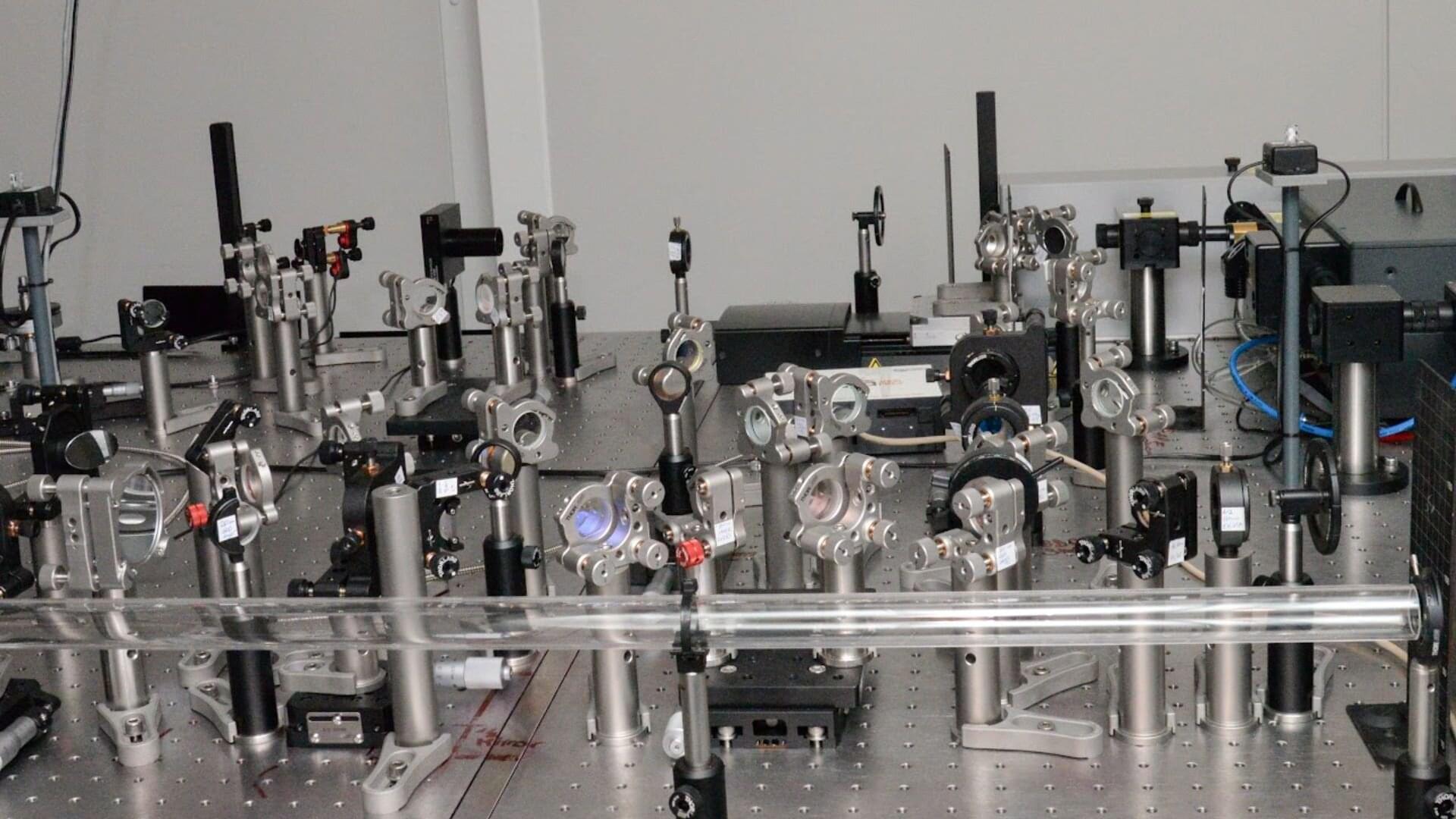
In a study published in Nature, LSU physicists have developed the first room-temperature quantum material capable of distinguishing and transporting different quantum states of light, overcoming one of the biggest challenges in quantum materials research. Led by Associate Professor of Physics Omar S. Magaña-Loaiza, the work establishes a general design principle for engineering an entirely new class of quantum materials, opening new possibilities for quantum computing, secure communications, sensing technologies and advanced energy systems.

Chinese scientists develop world’s first bionic auditory neural interface, enabling artificial auditory nerve to ‘understand’ sounds

Chinese scientists have successfully developed the world’s first bionic auditory neural interface, enabling conventional cochlear implants to progress from helping users hear sounds to helping them understand what they hear, marking a major advance from restoring hearing perception to rebuilding auditory function, the Global Times learned from the research team on Monday.

Beyond traditional cochlear implants, this research led by Xu Wentao, professor from the College of Electronic Information and Optical Engineering, Nankai University, provides a new technological pathway for auditory reconstruction through an innovative electronic replacement and restorative solution. The research results were recently published in the international academic journal Nature Materials.

Plant-based wound dressing fights infection before it takes hold

A new dressing made from plant-based materials can deliver antibiotics directly to wounds during critical early stages of infection, according to researchers from the University of Bath. The study, published in Bioactive Materials, is the first to use this family of sustainable furan-based polymers, previously explored for sustainable plastics and packaging, for infection-fighting wound dressings.

Wound infections are a major challenge for health care systems worldwide and are estimated to cost the NHS alone billions every year. Bacteria can enter a wound and begin forming a protective, slimy layer known as a biofilm within hours, slowing healing and making infections much harder to treat.

The team from the Department of Chemical Engineering and the Department of Chemistry created a novel, two-sided dressing from sustainable polymers, plastic-like materials sourced from plants rather than petrochemicals. One side of the dressing rapidly releases antibiotics into the wound, while the other acts as a barrier to maintain the protected healing environment.

Oobleck droplets reveal 5 ways cornstarch ‘goo’ behaves when hitting water

Cornstarch can thicken soup or serve as a base for a DIY shampoo, but there’s more to the humble pantry staple. Given the right conditions, it seems to defy the laws of physics. Mixing cornstarch with water creates “oobleck”—a shape-shifting substance classified as a non-Newtonian fluid that changes states when subjected to a force.

Leave it alone, and it oozes like liquid. Stir it up, and it gets more viscous before locking into a solid. Under certain conditions, if it’s punctured, it can even fracture, according to Northeastern University researchers. The thickening phenomenon is known as the oobleck effect.

Back in 1949, Seuss made oobleck famous as the “green goo” wreaking havoc on a fictional kingdom that a boy named Bartholomew endeavors to rescue. But today, Northeastern mechanical and industrial engineering scientist Xiaoyu Tang and Ph.D. student Boqian Yan are using the same mix of ingredients for a different purpose.

Reimagining the furnace: How a new magnetic design could supercharge industrial plasma

Imagine trying to trap a miniature star inside a machine without letting it touch the walls or burn itself out. This is the central, high-stakes challenge of high-temperature plasma engineering.

High-temperature plasma systems are crucial for modern industry. They serve as the foundation for manufacturing semiconductors, synthesizing advanced nanomaterials and testing materials meant for extreme environments. However, for decades, these systems have been held back by three major engineering bottlenecks: low energy-conversion efficiency, chaotic plasma instability and rapid material degradation caused by punishing heat.

In my recent paper published in IEEE Transactions on Plasma Science, I set out to tackle these limitations by designing a completely new type of non-nuclear reactor: the Spherical Magnetically Stabilized Plasma Furnace, or SMSPF. My initial goal was to step away from traditional linear or cylindrical reactor designs to see whether a spherical geometry could inherently solve containment issues.

New imaging method reveals how electric fields reshape ferroelectric materials

New research is shedding light on longstanding debates over the behavior of ferroelectric materials when those materials are exposed to electric fields. The findings stem from the use of a novel technique that allows researchers to observe the real-time behavior of domain walls in ferroelectric materials as they are “poled” and “depoled.”

Ferroelectric materials are used in a wide range of technologies, from sensors to actuators, and their electrical properties are critical to their utility. It’s well established that you can bring the various domains in a ferroelectric material into alignment by applying an electric field—either direct current (DC) or alternating current (AC). This is called “poling.” However, there has been significant debate about what exactly is taking place during the poling process.

“We’re now able to observe what is happening in real time, which gives us deeper insights into the mechanisms at play—which will inform our ability to engineer materials in order to produce the electrical characteristics we’re looking for,” says Jun Liu, co-corresponding author of two papers on the work and an associate professor of mechanical and aerospace engineering at North Carolina State University.

3D-printed battery electrolyte could let devices store power in almost any shape

Researchers at The University of Texas at El Paso have developed a way to 3D-print an essential battery component in nearly any shape. Their innovation could free engineers from the constraints of standard rechargeable battery sizes and allow energy storage to be built directly into the devices the batteries power.

The work, detailed in a study published in Communications Engineering, centers on gel polymer electrolytes, the material inside a battery that carries the ions (the particles that carry the electrical charge) between the electrodes—the two terminals where chemical reactions occur and electricity enters or leaves the battery.

From liquid limits to printable gel Conventional electrolytes are liquids that must be sealed inside rigid casings, a design that limits battery shapes and raises safety concerns about leaks. The UTEP team instead created a printable gel by combining a light-curable resin with a lithium-based liquid electrolyte, then hardening it layer by layer using a technique called vat photopolymerization.

New CRISPR method makes it possible to control protein production in cells

The speed at which a cell produces proteins is a decisive factor in determining whether it divides, specializes or retains its stem cell properties. A team of researchers led by Professor Stefan H. Stricker, professor of epigenetic engineering at LMU’s Biomedical Center and research group leader at Helmholtz Munich, has worked with international partners to demonstrate directly for the first time that the amount of ribosomal RNA (rRNA) directly regulates these processes. Their results were published in the journal Science.

It has been established for some time that the amount of ribosomal RNA differs among different types of cells and is altered in a number of diseases. But it remained unclear whether these specific characteristics are the cause or merely the result of biological processes.

With the newly developed CRISPR-based method TAPIR (Targeted Activation of Protein Translation), researchers now have access to a tool that can boost the activity of ribosomal genes and, as a result, influence a cell’s protein production. “Our new study shows that targeted activation of rRNA production significantly increases protein synthesis,” explains Stricker, lead author of the publication.

Why some glasses break suddenly while others deform smoothly

If a liquid is cooled slowly to its freezing point, it becomes a crystal in which the constituent particles are arranged in an ordered pattern. In contrast, when the liquid is cooled very quickly, the particles are unable to arrange themselves in an ordered fashion, and it becomes glass. Glassy materials are all around us in everyday life. Common examples include window glass, certain metal alloys, polymers, foams, gels and even soft materials like emulsions and colloids.

These materials can behave very differently when an external force is applied to them, such as bending, stretching or compressing. Some materials change shape slowly and smoothly under strain (this property is called ductility). Some materials may resist deformation at first but then suddenly break or crack without warning (this property is called brittleness). Whether a material bends or breaks determines how safely and reliably it can be used in everyday objects and engineering applications.

Scientists broadly classify glasses into two types: strong and fragile glasses.

/* */